
Current service information
Hardness tester of plastics
SAUTER Shore hardness testers, the brand for precision measuring instruments, enable reliable Shore hardness testing of plastics, elastomers and rubber quickly and accurately. They are ideal for laboratory, production and quality control and can be used flexibly – both mobile and stationary.
Filter
Minimize window
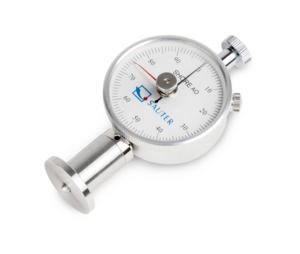

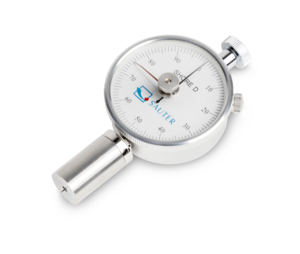


Shore Hardness Testers for Plastics – Precise and Practical Hardness Testing Solutions
Shore hardness testing is a well-established method for determining the hardness of materials such as plastics, elastomers, and rubber. The type of durometer used depends on the material and the application – for example, Shore A for softer materials and Shore D for harder thermoplastics. SAUTER hardness testers, developed and distributed by KERN & SOHN GmbH, offer a wide selection of high-quality Shore hardness testers for plastics, suitable for both mobile and stationary use.
Key Advantages of SAUTER Shore Hardness Testers
✔ Shore hardness testers for Shore A, Shore 0, and Shore D
✔ Optional test stands for improved measurement accuracy
✔ Easy-to-read analog scales or digital displays
✔ Ideal for use in laboratories, industry, and education
✔ Optional complete kits with reference blocks and calibration certificates
Thanks to their compact design, many models are ideal for mobile use, e.g. for incoming goods inspection or on-site testing.
Typical Applications
• Hardness testing of plastic components in incoming goods control
• Shore hardness measurement during quality control of injection molded parts
• Material testing in R&D and educational environments
• Quality assurance of rubber and plastic products
Why Choose KERN & SOHN?
With more than 180 years of experience, KERN & SOHN GmbH and the SAUTER brand provide high-performance solutions for industrial quality assurance.
✔ Decades of expertise in hardness testing and measurement technology
✔ Precision-engineered, durable, and user-friendly devices
✔ Personal consultation and customized system solutions
FAQ – Frequently Asked Questions About Shore Hardness Testing of Plastics
1. What is a Shore hardness tester?
A Shore hardness tester (also known as a durometer) measures the penetration depth of a standardized indenter into a material – especially plastics, elastomers, and rubber. The test scale depends on the material, such as Shore A, Shore D, or Shore 0.
2. How does Shore hardness testing work for plastics?
During testing, a standardized indenter is pressed into the material with a defined force. The penetration depth is measured and displayed in Shore units. The shallower the penetration, the higher the Shore hardness.
3. What types of Shore hardness testers are available?
• Shore A – for soft plastics and rubber
• Shore D – for hard thermoplastics
• Shore 0 for soft materials such as foams or sponges
4. What are Shore hardness testers for plastics used for?
• Quality assurance of plastic parts
• Laboratory material testing
• Incoming goods inspection
• Research and development
5. Are digital Shore hardness testers available?
Yes – SAUTER offers both analog and digital durometers.
Digital models allow precise readings, data storage, and digital evaluation.
6. How accurate are Shore hardness testers?
Accuracy depends on the model, setup, and handling. A test stand is recommended to ensure consistent force and reproducible results.
7. What accessories are recommended for Shore durometers?
• Test stands for uniform application of force
• Reference blocks for performance checks
• Factory calibration certificate for the hardness reference plates for Shore A or Shore D
• Software tools for digital data acquisition and analysis
Buy SAUTER Shore Hardness Testers Now!
SAUTER Shore durometers by KERN & SOHN GmbH offer reliable results and practical usability – tailored to the needs of modern materials testing.
✔ Precision and efficiency for labs, production, and quality assurance
✔ Available as complete sets including test stand and reference blocks
Contact our expert team for personalized advice:
Tel. +49 (0) 7433 / 9933-562
E-Mail: info.sauter@kern-sohn.com
Shore hardness testing is a well-established method for determining the hardness of materials such as plastics, elastomers, and rubber. The type of durometer used depends on the material and the application – for example, Shore A for softer materials and Shore D for harder thermoplastics. SAUTER hardness testers, developed and distributed by KERN & SOHN GmbH, offer a wide selection of high-quality Shore hardness testers for plastics, suitable for both mobile and stationary use.
Key Advantages of SAUTER Shore Hardness Testers
✔ Shore hardness testers for Shore A, Shore 0, and Shore D
✔ Optional test stands for improved measurement accuracy
✔ Easy-to-read analog scales or digital displays
✔ Ideal for use in laboratories, industry, and education
✔ Optional complete kits with reference blocks and calibration certificates
Thanks to their compact design, many models are ideal for mobile use, e.g. for incoming goods inspection or on-site testing.
Typical Applications
• Hardness testing of plastic components in incoming goods control
• Shore hardness measurement during quality control of injection molded parts
• Material testing in R&D and educational environments
• Quality assurance of rubber and plastic products
Why Choose KERN & SOHN?
With more than 180 years of experience, KERN & SOHN GmbH and the SAUTER brand provide high-performance solutions for industrial quality assurance.
✔ Decades of expertise in hardness testing and measurement technology
✔ Precision-engineered, durable, and user-friendly devices
✔ Personal consultation and customized system solutions
FAQ – Frequently Asked Questions About Shore Hardness Testing of Plastics
1. What is a Shore hardness tester?
A Shore hardness tester (also known as a durometer) measures the penetration depth of a standardized indenter into a material – especially plastics, elastomers, and rubber. The test scale depends on the material, such as Shore A, Shore D, or Shore 0.
2. How does Shore hardness testing work for plastics?
During testing, a standardized indenter is pressed into the material with a defined force. The penetration depth is measured and displayed in Shore units. The shallower the penetration, the higher the Shore hardness.
3. What types of Shore hardness testers are available?
• Shore A – for soft plastics and rubber
• Shore D – for hard thermoplastics
• Shore 0 for soft materials such as foams or sponges
4. What are Shore hardness testers for plastics used for?
• Quality assurance of plastic parts
• Laboratory material testing
• Incoming goods inspection
• Research and development
5. Are digital Shore hardness testers available?
Yes – SAUTER offers both analog and digital durometers.
Digital models allow precise readings, data storage, and digital evaluation.
6. How accurate are Shore hardness testers?
Accuracy depends on the model, setup, and handling. A test stand is recommended to ensure consistent force and reproducible results.
7. What accessories are recommended for Shore durometers?
• Test stands for uniform application of force
• Reference blocks for performance checks
• Factory calibration certificate for the hardness reference plates for Shore A or Shore D
• Software tools for digital data acquisition and analysis
Buy SAUTER Shore Hardness Testers Now!
SAUTER Shore durometers by KERN & SOHN GmbH offer reliable results and practical usability – tailored to the needs of modern materials testing.
✔ Precision and efficiency for labs, production, and quality assurance
✔ Available as complete sets including test stand and reference blocks
Contact our expert team for personalized advice:
Tel. +49 (0) 7433 / 9933-562
E-Mail: info.sauter@kern-sohn.com