
Current service information
Infrared Thermometers
SAUTER infrared thermometers enable precise non-contact temperature measurement. Ideal for use in industry, laboratories, maintenance and food safety.
Includes professional IR thermometers with laser targeting and wide measuring ranges.
Filter
Minimize window

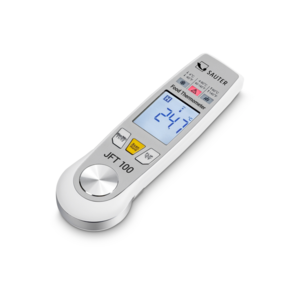


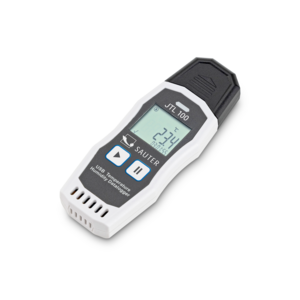
Infrared Thermometers – for professional, non-contact temperature measurement
Whether in industrial environments, food safety applications or laboratories – infrared thermometers (also referred to as IR thermometers or infrared thermometers) are indispensable wherever fast and contactless temperature readings are required. The models offered by KERN deliver precise results from a safe distance and are exceptionally user-friendly.
Advantages of KERN Infrared Thermometers
The infrared thermometers from KERN combine state-of-the-art sensor technology with practical features:
✔ Non-contact measurement: Ideal for hygienic applications, hot surfaces, or hard-to-reach areas.
✔ Dual laser targeting system (e.g., KERN JIT-200): Precise definition of the measurement spot.
✔ EBTN display with backlight: Easy to read even in challenging lighting conditions.
✔ Hold function and Max/Min values: For convenient documentation and comparison.
✔ Wide temperature range up to +1100 °C (depending on model).
✔ Compact or ergonomic design: Suitable for both stationary and mobile use.
Typical Applications & Target Groups
KERN infrared thermometers are used across a wide range of industries and professional fields:
Maintenance and servicing: Temperature checks on electrical systems, motors, or heating systems – fast, safe, and without contact.
Food industry and gastronomy: Monitoring food temperatures upon delivery.
Building technology & energy consulting: Detecting thermal bridges, measuring at ventilation or heating systems.
Research & education: Temperature measurement in experiments, test series, or material analysis – e.g., in schools and universities.
What does KERN & SOHN offer in the field of infrared thermometers?
We offer a range of infrared thermometer models, tailored to the requirements of different industries.
Whether for quality control in production, temperature checks in the kitchen, or precise laboratory measurements – SAUTER provides the right temperature measuring device for every application: compact, professional, and equipped with a laser targeting system, wide temperature range, and user-friendly features.
Our recommendation for industrial and technical maintenance: the KERN JIT series – professional infrared thermometers with dual laser, wide temperature range (up to 1100 °C), adjustable emissivity, and versatile additional functions.
? FAQ – Frequently Asked Questions about Infrared Thermometers
1. How does an infrared thermometer work?
An infrared thermometer measures the thermal radiation emitted by an object in the infrared spectrum. This radiation is captured by a sensor and converted into a temperature reading – non-contact, fast, and safe.
2. What is the difference between an infrared thermometer and a conventional thermometer?
Unlike contact thermometers, an infrared thermometer measures temperature without touching the object. It is ideal for hot, moving, or hard-to-reach surfaces, while traditional thermometers require direct contact.
3. How accurate is an infrared thermometer?
The accuracy depends on the model, optical resolution, and the emissivity of the measured object. High-quality KERN models typically achieve an accuracy of ±1.5 °C or up to ±1.5 %.
4. Can you use an infrared thermometer to measure the core temperature of food?
No, an infrared thermometer only measures surface temperature. To determine the core temperature of food, a penetration thermometer is required.
5. Why is emissivity important in infrared thermometers?
Emissivity determines how well a material emits infrared radiation. For reflective or shiny surfaces such as metal, the emissivity must be adjusted to obtain accurate readings. Many KERN models offer manual emissivity adjustment for this purpose.
6. How do I choose the right IR thermometer for my application?
It depends on the field of application: for industrial and maintenance use, models with a wide temperature range and dual laser are recommended. The KERN product lines offer solutions tailored to these needs.
7. What does the D:S ratio mean in infrared thermometers – and why is it important?
The D:S ratio (Distance-to-Spot Ratio) defines the diameter of the measurement spot – the area from which the thermometer captures the temperature – in relation to the distance from the target.
The larger the D:S ratio, the smaller and more precise the measurement spot at greater distances.
Example: A device with a ratio of 20:1 measures a 1 m spot from a 20 m distance. At 50 m, the spot increases to approximately 2.5 m.
Important: For accurate results, the measurement area should completely cover the spot size – ideally be larger than it.
A high D:S ratio is a quality indicator for optical resolution. It allows even small targets to be reliably measured from a distance. KERN & SAUTER infrared thermometers offer various D:S ratios depending on the model and intended use.
Over 180 years of German engineering experience
Founded in 1844, KERN & SOHN GmbH is a long-established German manufacturer of precision balances and measuring instruments. With more than 180 years of experience, KERN stands for reliability, precision and innovation, trusted by professionals in industry, laboratories, food technology and scientific research.
We provide not only DAkkS-accredited calibration and conformity assessments, but also expert consulting and a strong focus on service – backed by the precision of German engineering.
Buy your infrared thermometer now!
Our experts are happy to support you in choosing the right model.
Phone: +49 (0) 7433 / 9933-562 or email: info.sauter@kern-sohn.com
Whether in industrial environments, food safety applications or laboratories – infrared thermometers (also referred to as IR thermometers or infrared thermometers) are indispensable wherever fast and contactless temperature readings are required. The models offered by KERN deliver precise results from a safe distance and are exceptionally user-friendly.
Advantages of KERN Infrared Thermometers
The infrared thermometers from KERN combine state-of-the-art sensor technology with practical features:
✔ Non-contact measurement: Ideal for hygienic applications, hot surfaces, or hard-to-reach areas.
✔ Dual laser targeting system (e.g., KERN JIT-200): Precise definition of the measurement spot.
✔ EBTN display with backlight: Easy to read even in challenging lighting conditions.
✔ Hold function and Max/Min values: For convenient documentation and comparison.
✔ Wide temperature range up to +1100 °C (depending on model).
✔ Compact or ergonomic design: Suitable for both stationary and mobile use.
Typical Applications & Target Groups
KERN infrared thermometers are used across a wide range of industries and professional fields:
Maintenance and servicing: Temperature checks on electrical systems, motors, or heating systems – fast, safe, and without contact.
Food industry and gastronomy: Monitoring food temperatures upon delivery.
Building technology & energy consulting: Detecting thermal bridges, measuring at ventilation or heating systems.
Research & education: Temperature measurement in experiments, test series, or material analysis – e.g., in schools and universities.
What does KERN & SOHN offer in the field of infrared thermometers?
We offer a range of infrared thermometer models, tailored to the requirements of different industries.
Whether for quality control in production, temperature checks in the kitchen, or precise laboratory measurements – SAUTER provides the right temperature measuring device for every application: compact, professional, and equipped with a laser targeting system, wide temperature range, and user-friendly features.
Our recommendation for industrial and technical maintenance: the KERN JIT series – professional infrared thermometers with dual laser, wide temperature range (up to 1100 °C), adjustable emissivity, and versatile additional functions.
? FAQ – Frequently Asked Questions about Infrared Thermometers
1. How does an infrared thermometer work?
An infrared thermometer measures the thermal radiation emitted by an object in the infrared spectrum. This radiation is captured by a sensor and converted into a temperature reading – non-contact, fast, and safe.
2. What is the difference between an infrared thermometer and a conventional thermometer?
Unlike contact thermometers, an infrared thermometer measures temperature without touching the object. It is ideal for hot, moving, or hard-to-reach surfaces, while traditional thermometers require direct contact.
3. How accurate is an infrared thermometer?
The accuracy depends on the model, optical resolution, and the emissivity of the measured object. High-quality KERN models typically achieve an accuracy of ±1.5 °C or up to ±1.5 %.
4. Can you use an infrared thermometer to measure the core temperature of food?
No, an infrared thermometer only measures surface temperature. To determine the core temperature of food, a penetration thermometer is required.
5. Why is emissivity important in infrared thermometers?
Emissivity determines how well a material emits infrared radiation. For reflective or shiny surfaces such as metal, the emissivity must be adjusted to obtain accurate readings. Many KERN models offer manual emissivity adjustment for this purpose.
6. How do I choose the right IR thermometer for my application?
It depends on the field of application: for industrial and maintenance use, models with a wide temperature range and dual laser are recommended. The KERN product lines offer solutions tailored to these needs.
7. What does the D:S ratio mean in infrared thermometers – and why is it important?
The D:S ratio (Distance-to-Spot Ratio) defines the diameter of the measurement spot – the area from which the thermometer captures the temperature – in relation to the distance from the target.
The larger the D:S ratio, the smaller and more precise the measurement spot at greater distances.
Example: A device with a ratio of 20:1 measures a 1 m spot from a 20 m distance. At 50 m, the spot increases to approximately 2.5 m.
Important: For accurate results, the measurement area should completely cover the spot size – ideally be larger than it.
A high D:S ratio is a quality indicator for optical resolution. It allows even small targets to be reliably measured from a distance. KERN & SAUTER infrared thermometers offer various D:S ratios depending on the model and intended use.
Over 180 years of German engineering experience
Founded in 1844, KERN & SOHN GmbH is a long-established German manufacturer of precision balances and measuring instruments. With more than 180 years of experience, KERN stands for reliability, precision and innovation, trusted by professionals in industry, laboratories, food technology and scientific research.
We provide not only DAkkS-accredited calibration and conformity assessments, but also expert consulting and a strong focus on service – backed by the precision of German engineering.
Buy your infrared thermometer now!
Our experts are happy to support you in choosing the right model.
Phone: +49 (0) 7433 / 9933-562 or email: info.sauter@kern-sohn.com